

Ice on an air conditioner sounds backwards, but it is one of the most common AC problems we see in metro Atlanta. A frozen coil can't absorb heat, so the house stops cooling, the system runs non-stop, and in the worst case the compressor gets damaged. The good news: most freeze-ups come from a short list of causes, and most are preventable.
How a split central AC works
Most homes have a split system. The outdoor unit (condenser) releases heat outside, its compressor pressurizes refrigerant, and a fan pushes warm air away. The indoor unit (air handler) has the evaporator coil, which absorbs heat from your home, and a blower fan that pushes cooled air through the ducts. The air filter sits in front of that coil and protects it.
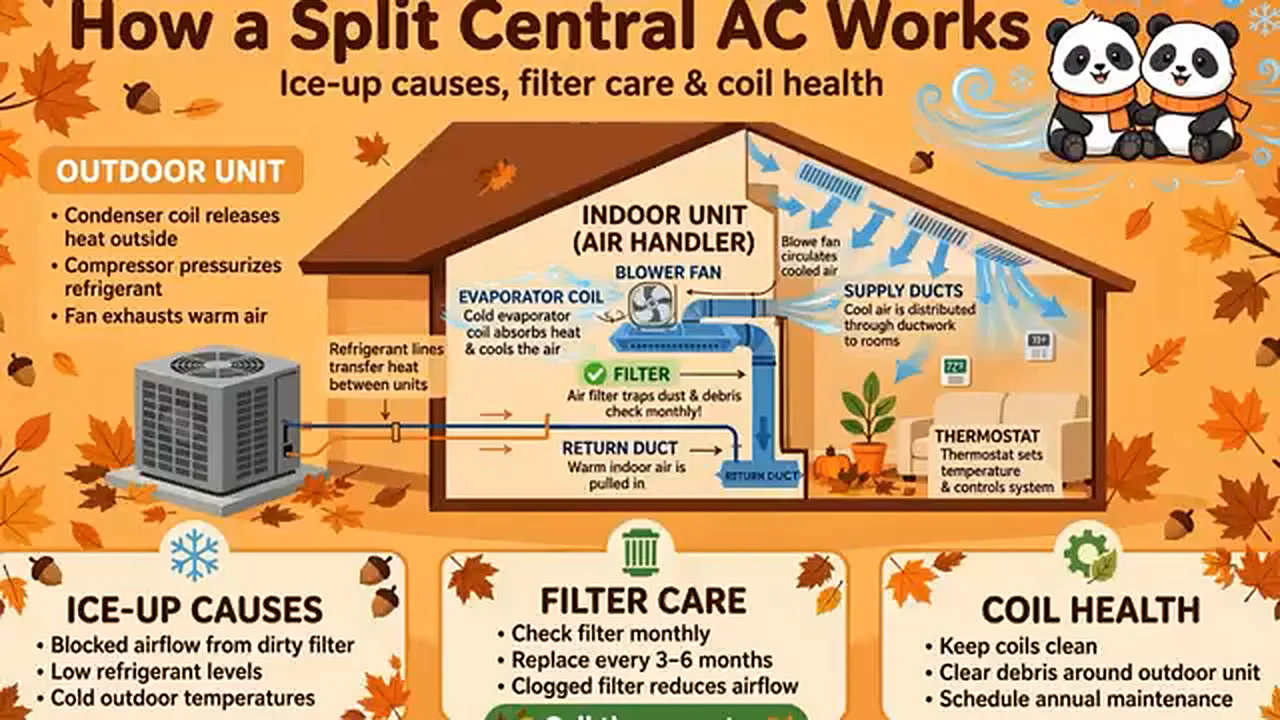
How a split central AC works: outdoor unit, indoor air handler, filter care and coil health.
The cooling cycle in four steps
- Evaporator coil (indoor): cold, low-pressure refrigerant absorbs heat from indoor air.
- Compressor (outdoor): squeezes the refrigerant, raising its pressure and temperature.
- Condenser coil (outdoor): releases that heat outside.
- Expansion valve: drops the pressure so the refrigerant is cold again and the loop repeats.
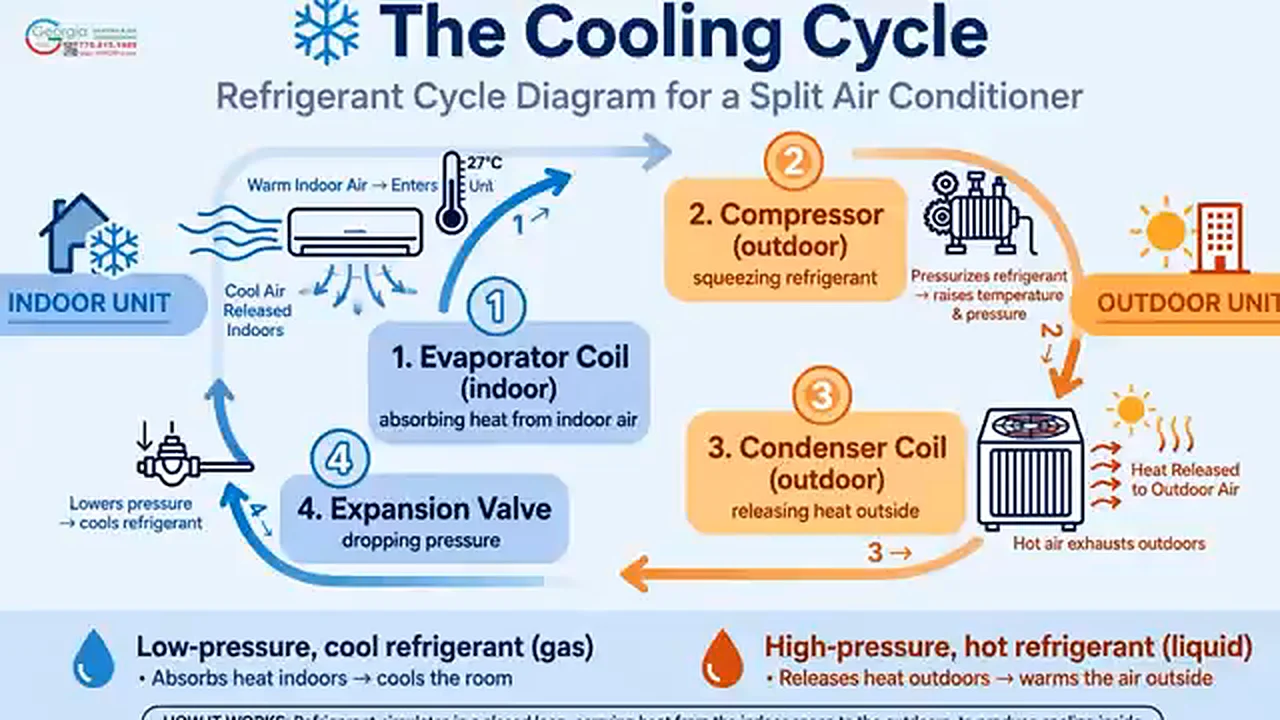
The refrigerant cycle moves heat from inside your home to the outdoors.
Why AC systems ice up
An evaporator coil freezes when it gets too cold, usually because not enough warm air is moving across it or the refrigerant charge is off. The most common causes:
- Dirty air filter: blocks airflow across the coil.
- Low refrigerant from a leak: drops coil pressure and temperature below freezing.
- Dirty evaporator coil: dust and grime insulate the coil and reduce heat transfer.
- Weak blower motor: not enough air moving through the system.
- Blocked or closed vents: restrict the airflow the system was designed for.
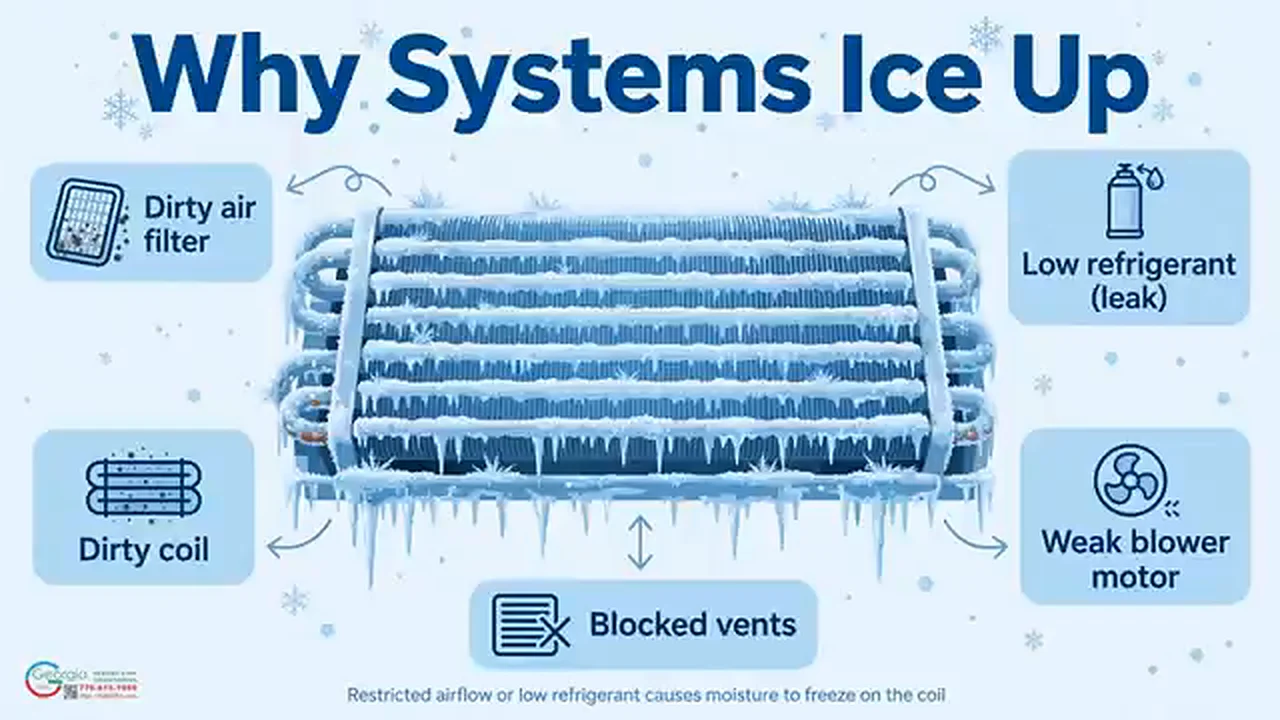
Restricted airflow or low refrigerant makes moisture freeze on the coil.
The air filter: your first line of defense
A clean filter means strong airflow, efficient dust capture and better indoor air quality. A clogged filter means weak airflow, dust buildup on the coil, lower efficiency and higher energy use. Check your filter monthly and replace it on schedule, typically every 3 to 6 months depending on the filter type, and more often with pets or construction dust.
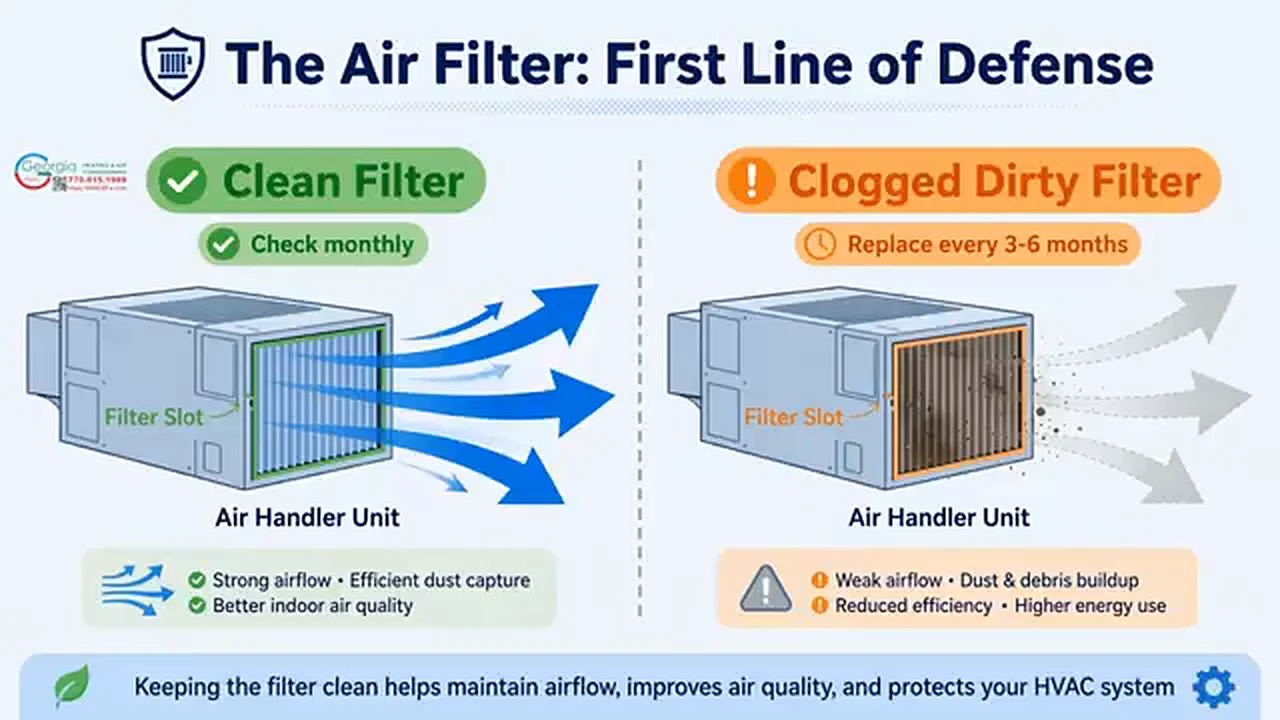
Clean filter vs. clogged filter: check monthly, replace on schedule.
Wear and tear: rusty evaporator coils
Over time, corrosion on the evaporator coil reduces heat transfer and can open tiny pinhole leaks where refrigerant escapes as gas. Both lead to icing. Regular maintenance catches corrosion before it turns into a costly repair.
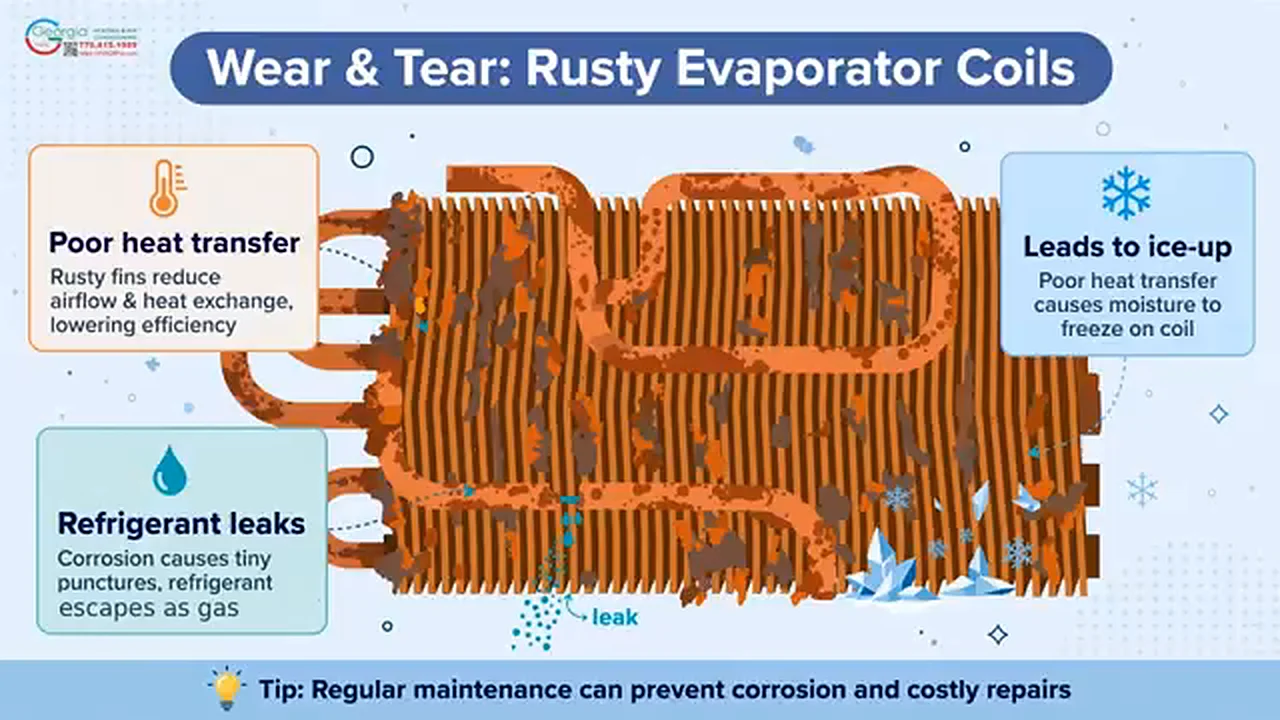
Corrosion causes poor heat transfer and refrigerant leaks, both of which lead to ice-up.
Dirty condenser coil
The outdoor coil needs to shed heat. When it's packed with dirt, leaves and grass clippings, the system rejects heat poorly, cools poorly, runs non-stop without keeping up, and drives your energy bill up.
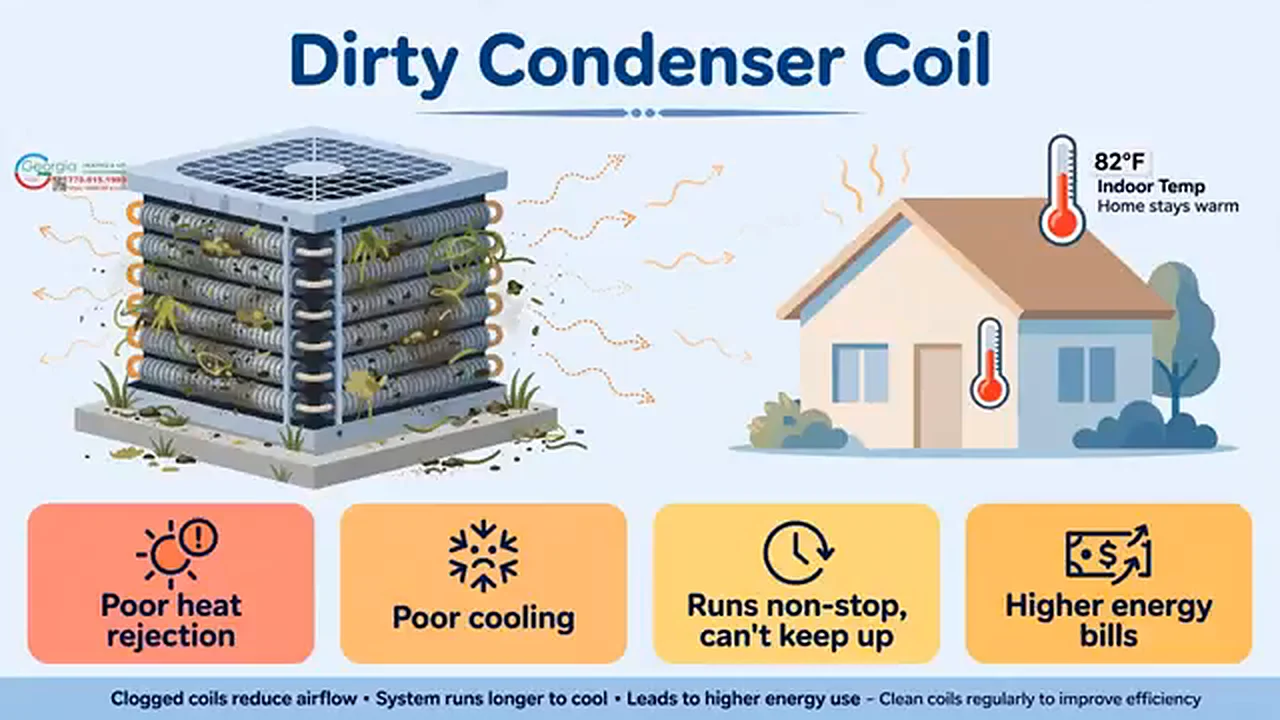
A clogged condenser coil means poor cooling and higher bills.
How to prevent ice-up
- Change your filter on schedule.
- Keep supply vents and return grilles open and unblocked.
- Get an annual professional tune-up.
- Don't run the AC to cool when it's below about 60°F outside.
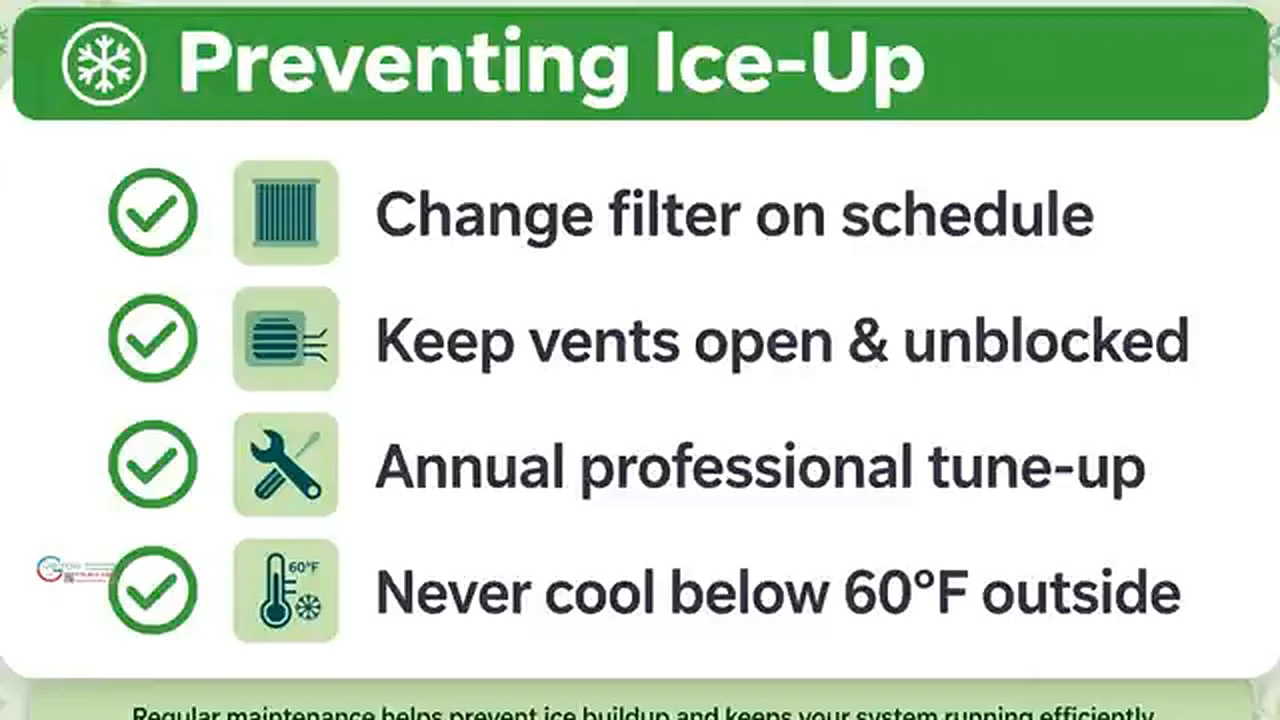
Four habits that prevent most AC freeze-ups.
If your AC is already frozen
Switch the thermostat from cooling to off and set the fan to on so warm air can thaw the coil. Never chip at the ice, since that can puncture the coil. Check and replace the filter. If it freezes again after thawing, there is likely a refrigerant, coil or blower problem that needs a technician.
AC iced over or not keeping up?
Georgia HVAC diagnoses frozen coils, refrigerant leaks and airflow problems across Chamblee and metro Atlanta, with upfront pricing before any work starts.
Call or Text (770) 815-1989