
Upstairs is too hot, downstairs is too cold, and the thermostat can only please one floor at a time. That is the classic problem in two-story metro Atlanta homes. A multi-zone (zoned) HVAC system solves it by splitting one heating and cooling system into separate zones, each with its own thermostat, so air goes only where it's needed.
System overview
A zoned system uses the same furnace and outdoor AC condenser you already know. The difference is in the ductwork: it's divided into zones (for example, Zone 1 upstairs and Zone 2 downstairs), and each zone can get warm or cool air independently.
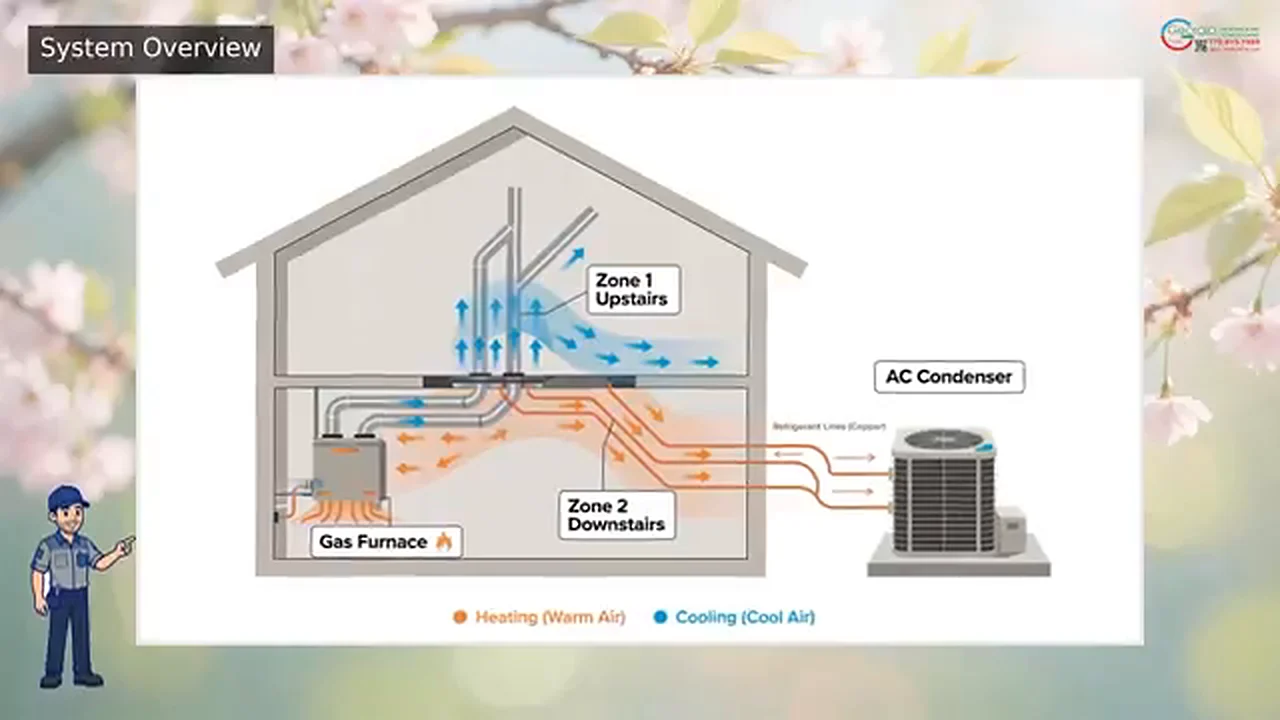
One furnace and one AC condenser, split into an upstairs zone and a downstairs zone.
Thermostats, zone panel and dampers
Each zone gets its own thermostat. The thermostats signal a zone control panel, and the panel opens and closes motorized dampers in the supply ducts to send air where it's being called for.
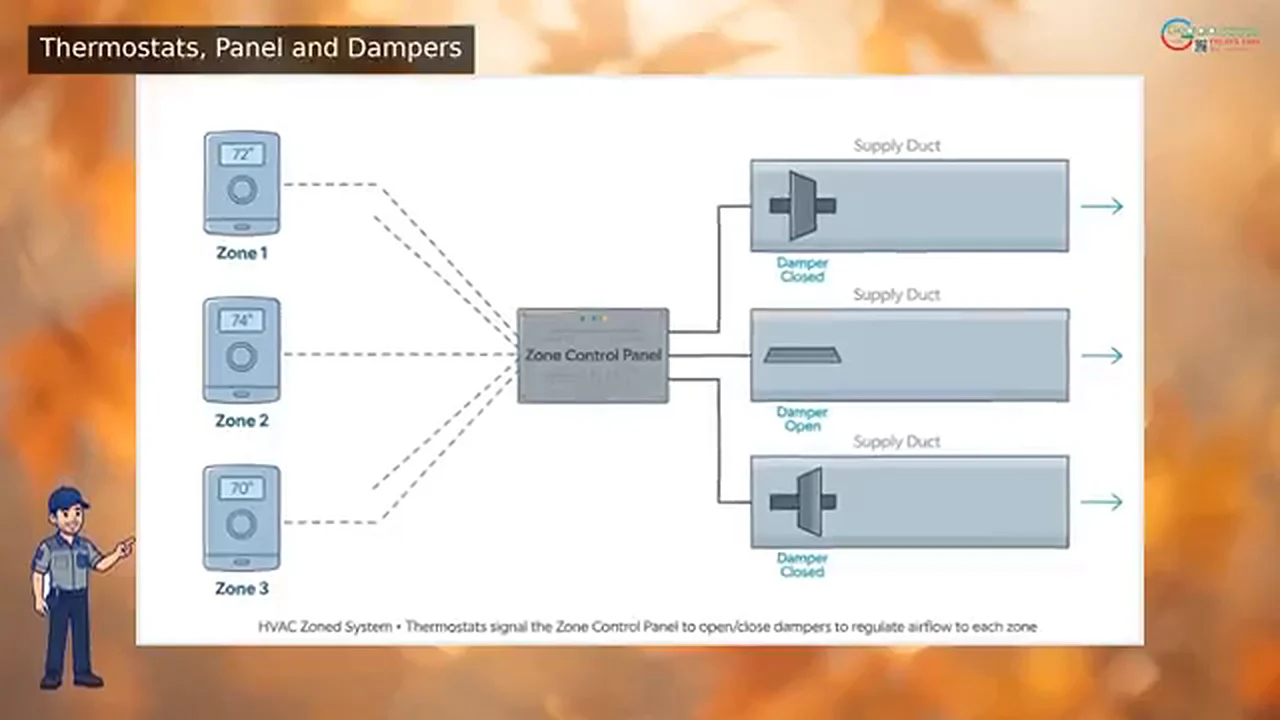
Thermostats signal the zone panel, which opens or closes the dampers in each supply duct.
A cooling call: air goes only where needed
When one room or floor calls for cooling, its damper opens while the others stay closed. Conditioned air goes to that zone instead of being spread across rooms that are already comfortable.
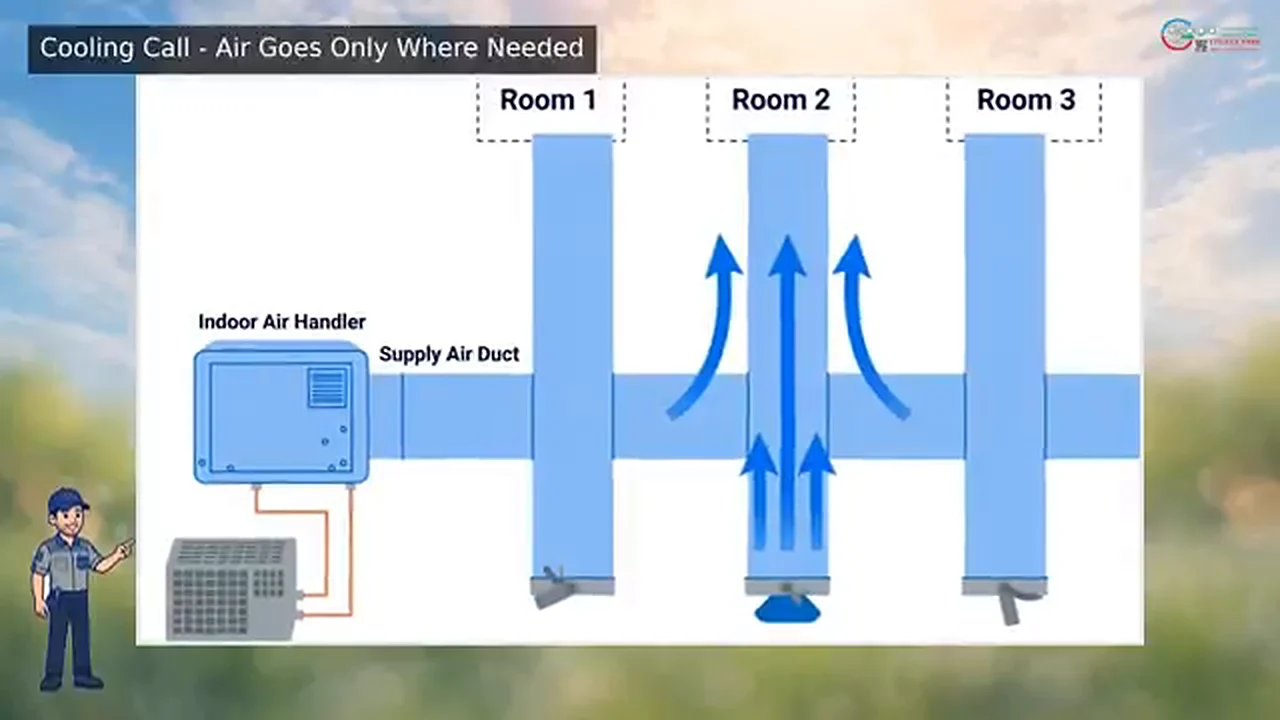
Only the zone that's calling for air gets it.
Heating, capacity matching and bypass
When only one small zone is calling, the furnace or AC can produce more air than that zone's ducts can carry. A properly designed system handles that extra airflow, for example with a bypass damper that routes excess air back around, or with variable-speed equipment that turns itself down to match the load.
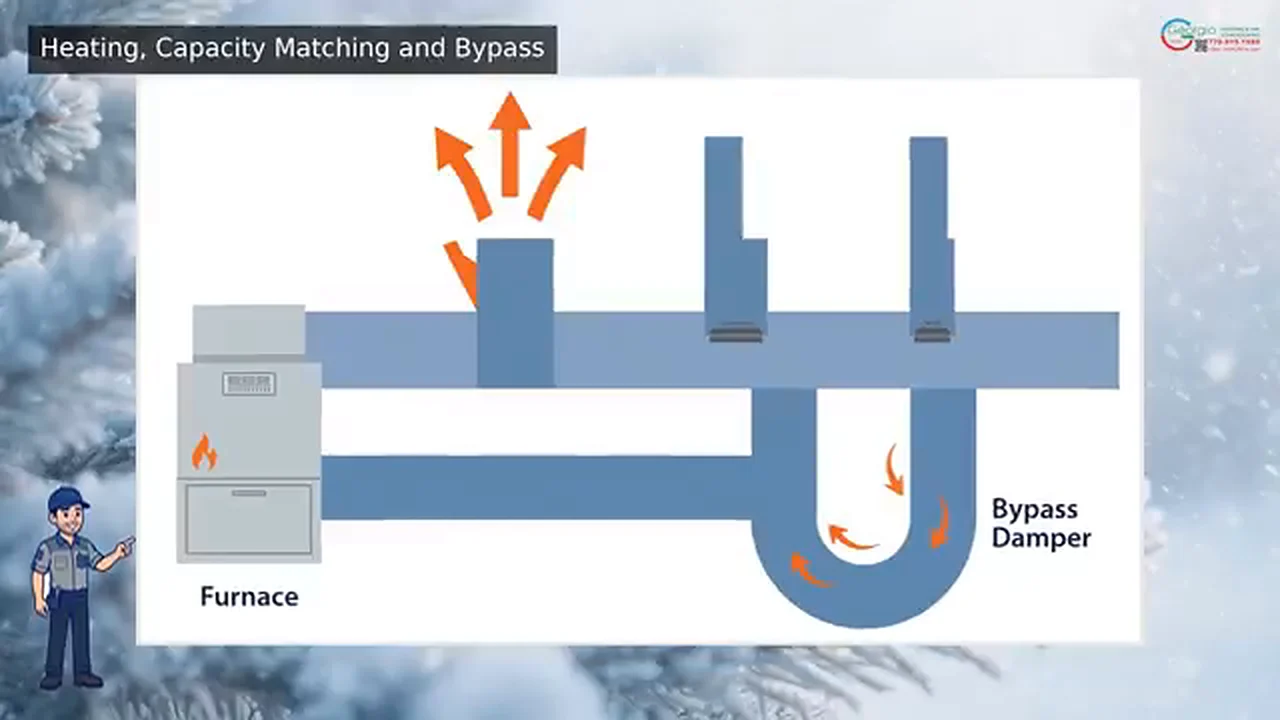
A bypass damper handles extra airflow when only one zone is calling.
Discharge air sensor: protecting the equipment
A discharge air sensor in the supply duct watches the temperature of the air leaving the equipment and reports to the zone panel. If air gets too hot in heating or too cold in cooling, the panel steps in to protect the furnace and AC coil.
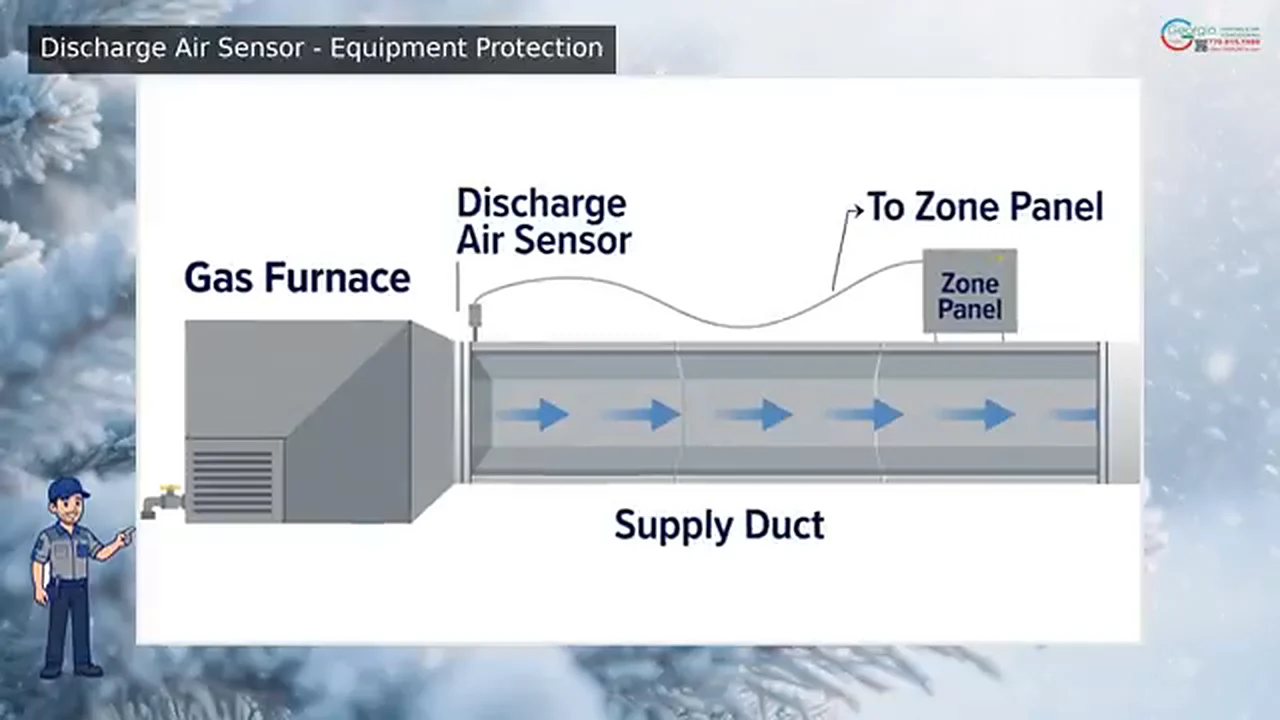
The discharge air sensor protects the equipment from running too hot or too cold.
A dedicated transformer: power done right
Motorized dampers draw power. A good zoning install gives the zone panel its own dedicated 24V transformer instead of overloading the furnace's control circuit, which keeps the dampers and controls reliable.
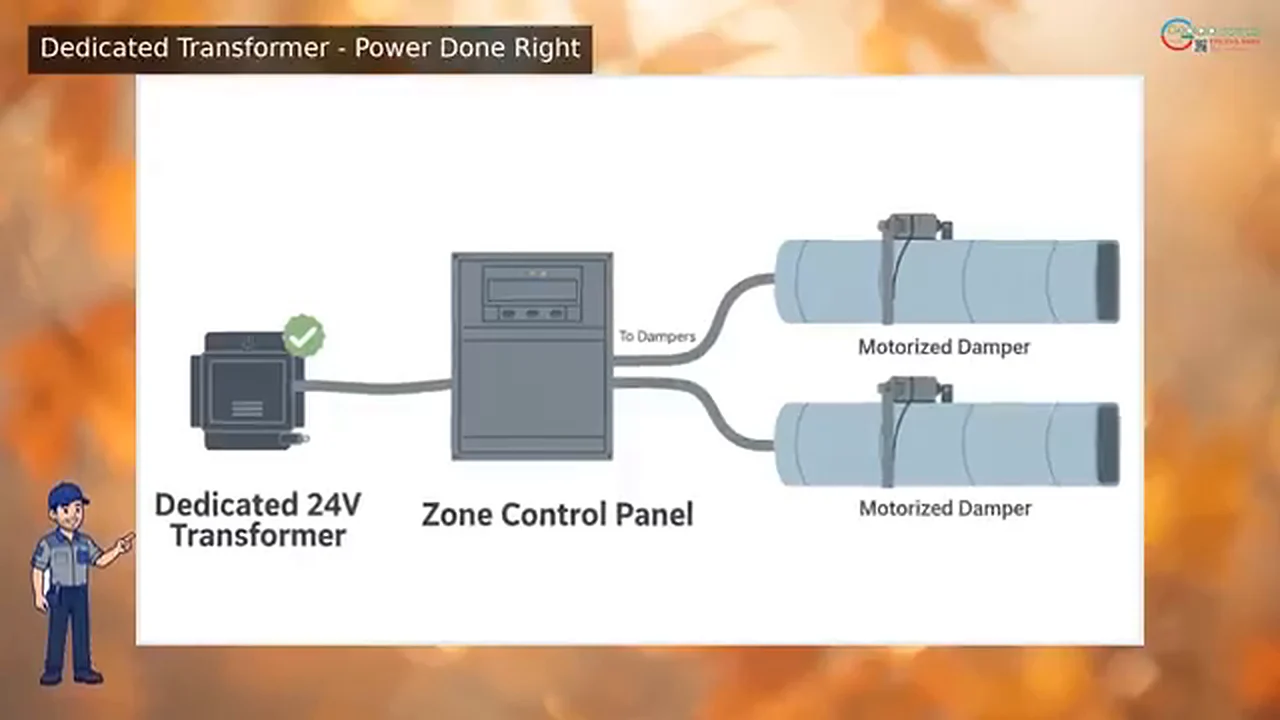
A dedicated 24V transformer powers the zone panel and dampers.
The core components
- Zone logic controller panel: the brain that reads every thermostat and drives the dampers.
- Motorized damper assemblies: open and close the ducts for each zone.
- Thermostats: one per zone, each set to its own temperature.
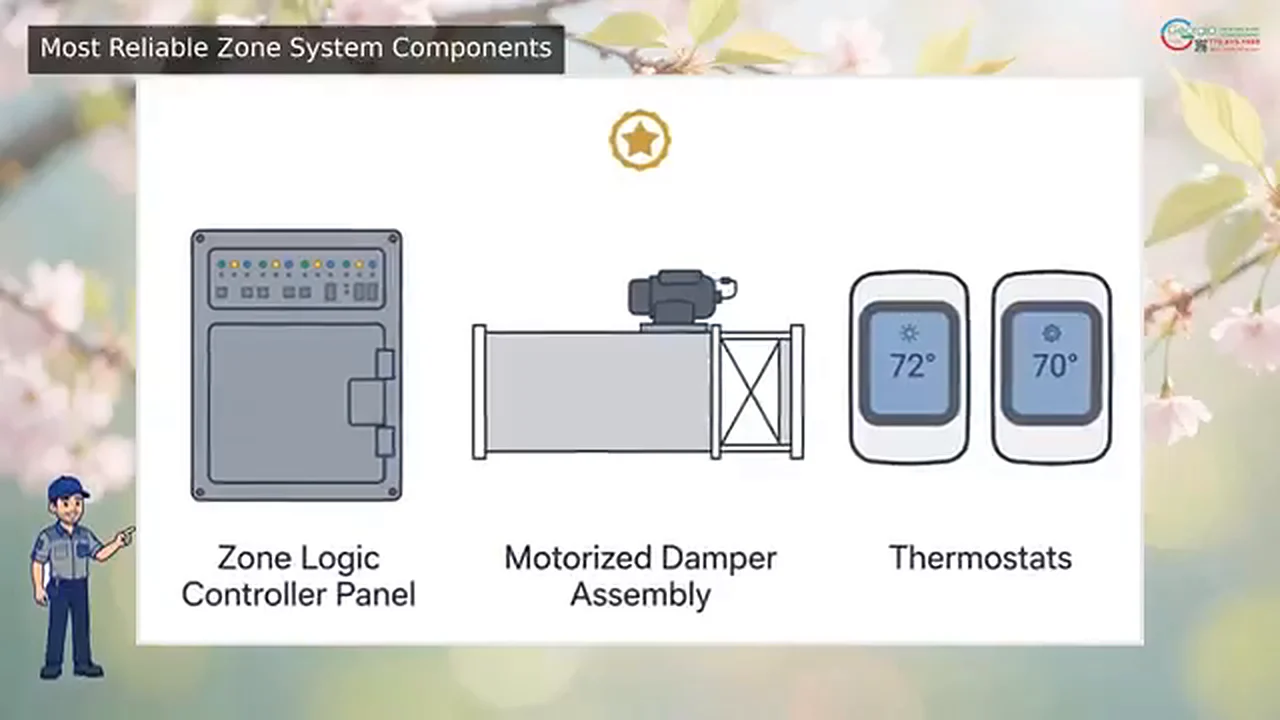
The three core zoning components.
Is zoning right for your home?
Zoning is worth a look if you have a two-story home with uneven temperatures, a bonus room over the garage that never feels right, rooms with lots of sun exposure, or family members who want different temperatures in different parts of the house.
Uneven temperatures in your home?
Georgia HVAC can look at your ductwork and equipment and tell you whether zoning or another fix is the right answer. Free estimates across Chamblee and metro Atlanta.
Call or Text (770) 815-1989