

Your AC is running, the thermostat says 68°F, and the house still feels damp and chilly. That isn't a temperature problem, it's a humidity problem. In a humid climate like metro Atlanta, an air conditioner can cool the air faster than it pulls moisture out of it, which leaves you cold and clammy at the same time.
A reheat coil fixes this. It lets your system remove moisture first, then warms the air back up to a comfortable temperature before it reaches your rooms. The result is air that is both cool and dry.
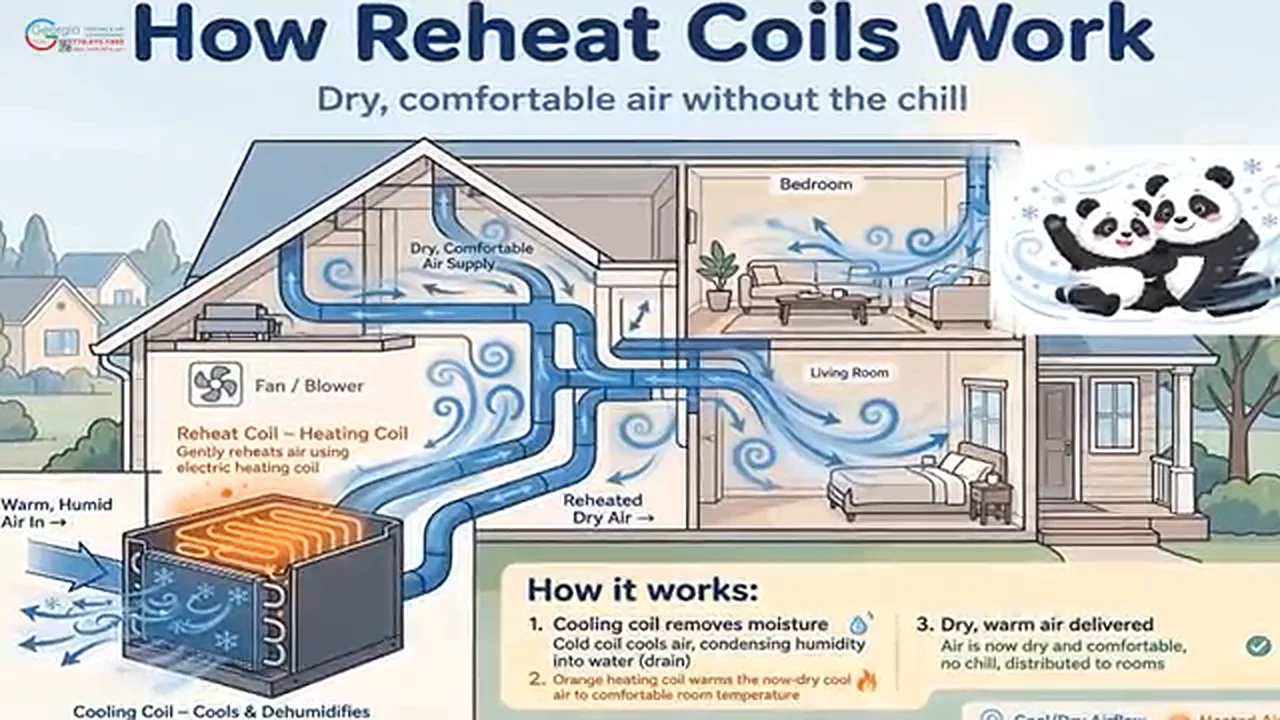
How reheat coils work: the cooling coil removes moisture, the reheat coil warms the dry air back up, and comfortable air goes to every room.
The cold-and-clammy problem
When indoor humidity is high, turning the thermostat down usually makes things worse. The air gets colder but stays damp, so everyone reaches for a blanket while the AC keeps running. Common signs include a damp or sticky feel to the air, a musty smell, condensation on windows or vents, and floors that feel tacky underfoot.

68°F with high humidity and cold airflow feels cold and clammy, not comfortable.
How a reheat coil works
A reheat coil sits in the air handler right after the cooling coil. Air moves through the system in four stages:
- Warm, humid return air enters the air handler (around 78°F and humid).
- The cooling coil chills the air to about 55°F. Moisture condenses on the coil and drains away.
- The reheat coil warms that now-dry air back up so it isn't uncomfortably cold.
- Comfortable supply air reaches your rooms around 72°F, dry and comfortable.
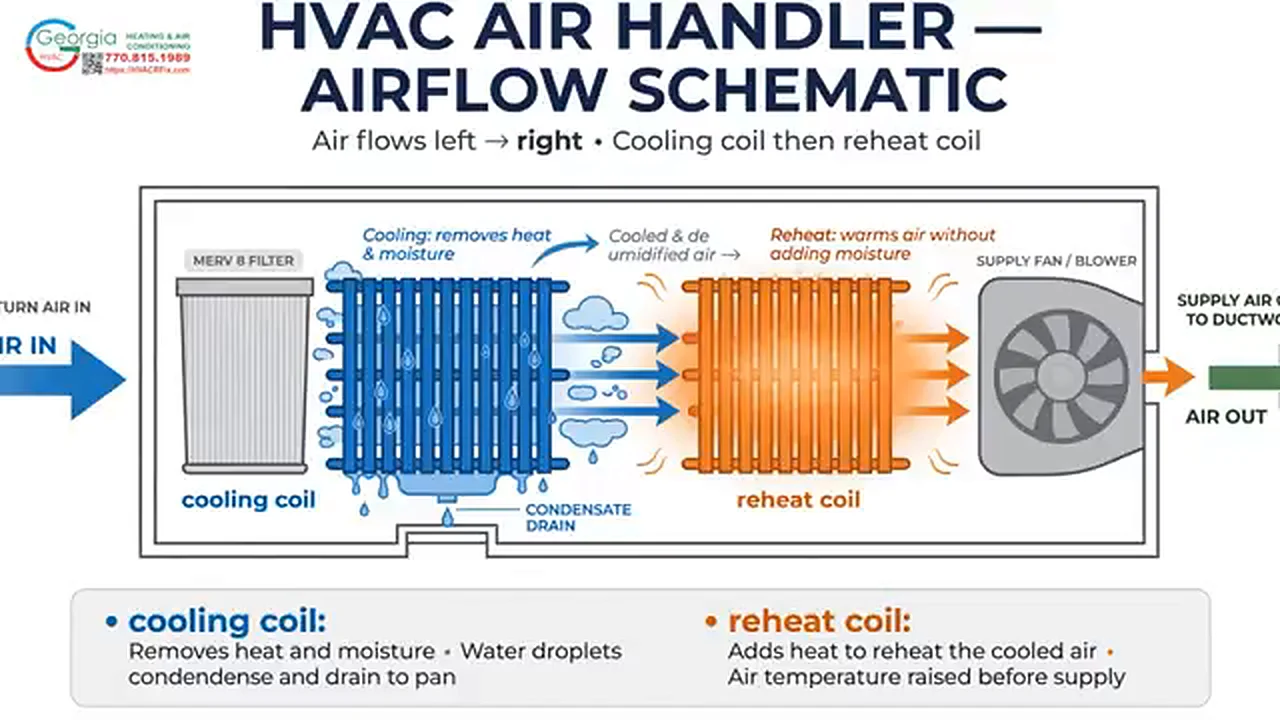
Inside the air handler, air flows through the filter, then the cooling coil, then the reheat coil, then out to the ductwork.
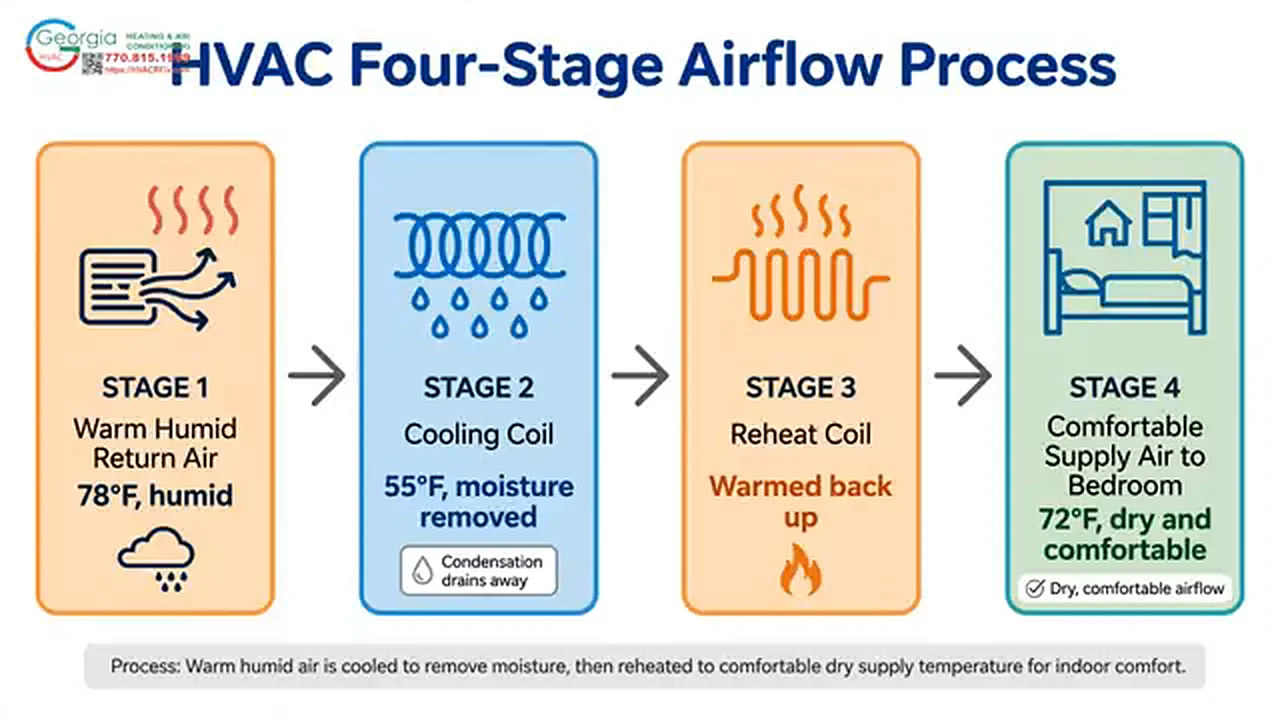
The four-stage airflow process: cool to remove moisture, then reheat for comfort.
Three types of reheat coils
All reheat coils do the same job, warming cooled and dehumidified air, but they get their heat from different places:
- Electric: uses an electric resistance element. Instant, precise control, and the most common choice in all-electric systems.
- Hot water: circulates hot water from a boiler or heat exchanger. Energy-efficient where a hot water loop already exists.
- Hot gas: reuses hot refrigerant gas from the compressor. It recycles heat the AC is already producing, so it is often the most efficient option.
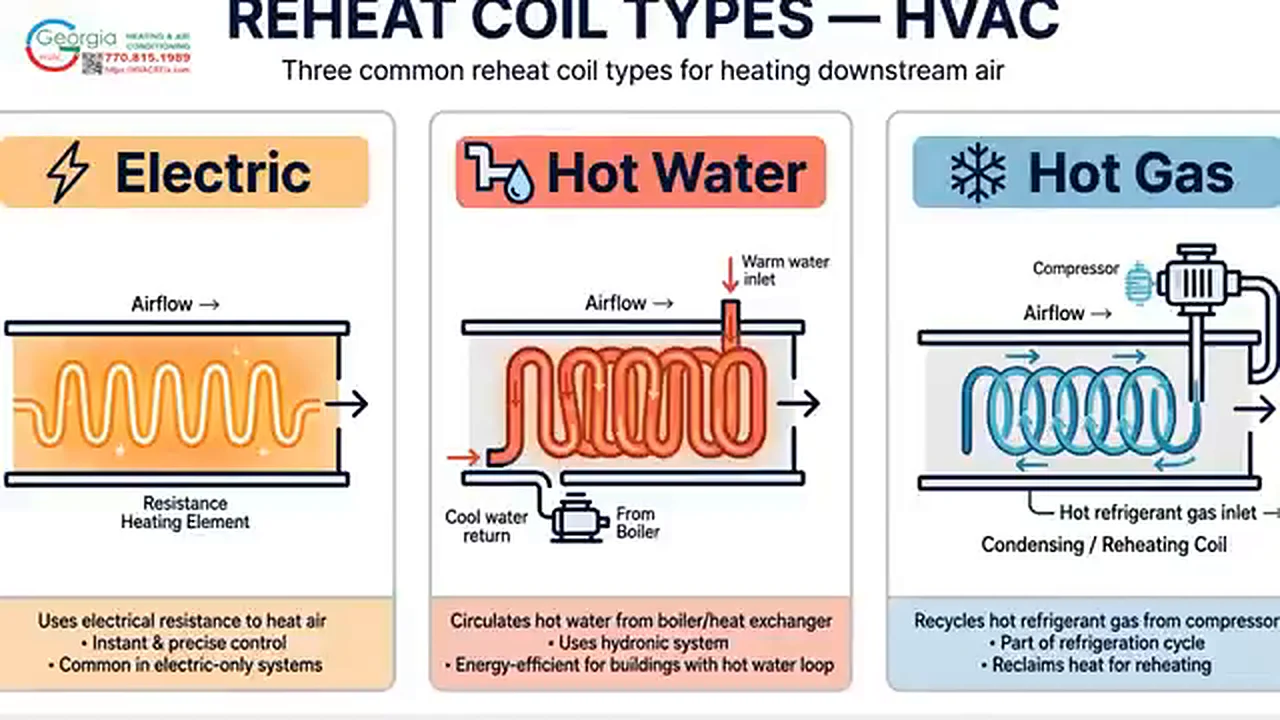
Electric, hot water and hot gas reheat coils.
Smart humidity and temperature control
A reheat system works best paired with a smart thermostat and a humidistat. The thermostat holds your target temperature (for example 72°F) while the humidistat watches indoor humidity (a common target is about 45%). The control board turns reheat on only when humidity rises above the setpoint, so it isn't running, or costing you money, when it isn't needed.
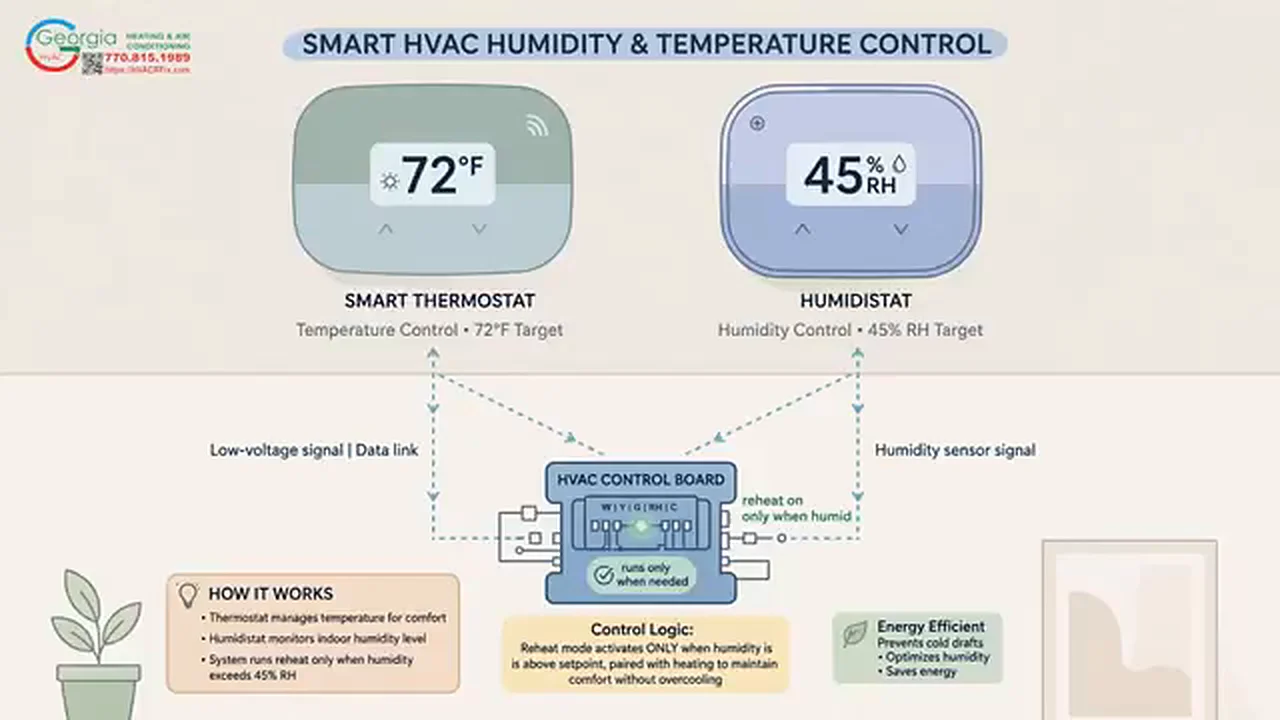
The thermostat controls temperature, the humidistat controls moisture, and reheat runs only when needed.
Where the reheat coil is installed
The reheat coil goes in the supply ductwork downstream of the evaporator (cooling) coil, usually at the air handler in a utility closet, attic or basement. Cool air passes over the evaporator, condensate drains away, and the reheat coil warms the air before it heads to the supply vents.
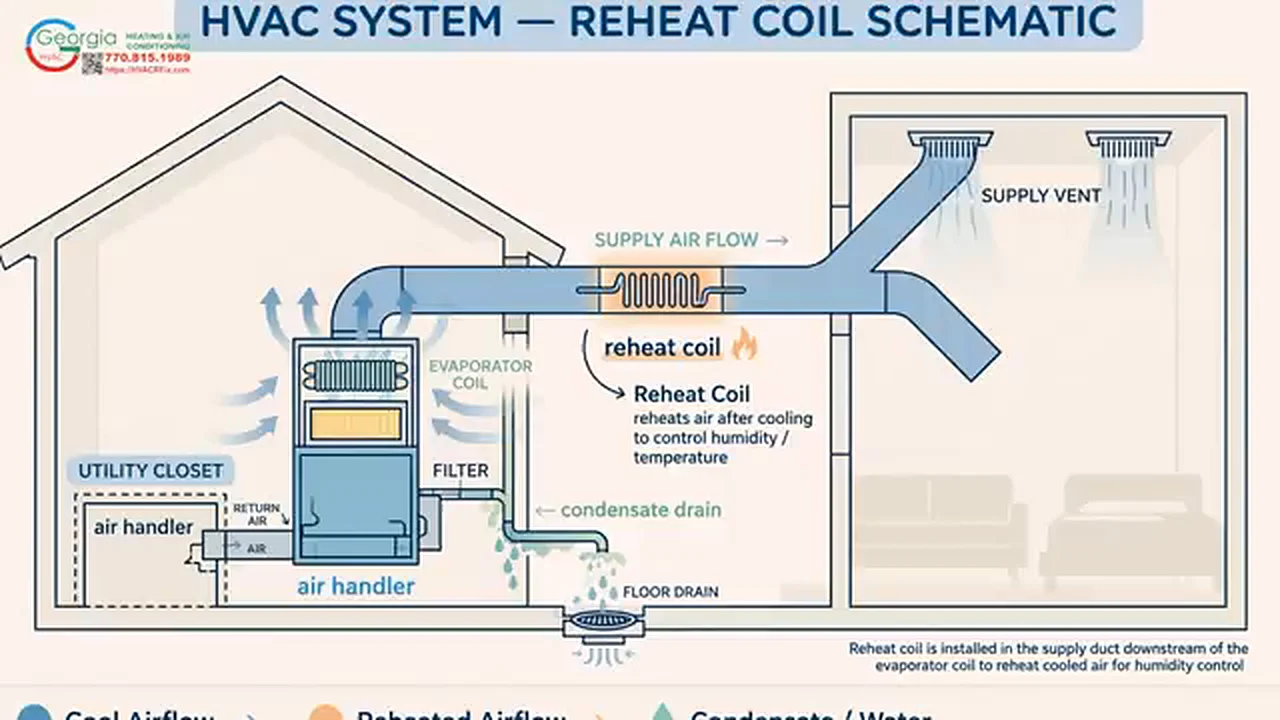
A reheat coil is installed in the supply duct right after the evaporator coil.
Why low indoor humidity pays off
- Feels cooler: dry air feels more comfortable, so you can raise the thermostat and still stay comfortable.
- Lower bills: drier air lets your AC run more efficiently, which can lower energy use.
- No mold or dust mites: lower humidity discourages mold growth and dust mites, keeping the home healthier.
- Protects wood floors: less moisture helps prevent warping, swelling and cracking.

Four benefits of keeping indoor humidity low in summer.
Is your home cold and clammy?
If your AC runs but the air still feels damp, smells musty, or you see condensation, Georgia HVAC can check your system's humidity control and tell you whether a reheat coil or another fix makes sense. Free estimates across Chamblee and metro Atlanta.
Call or Text (770) 815-1989